
How to Evaluate Saffron Quality: A Buyer’s Guide
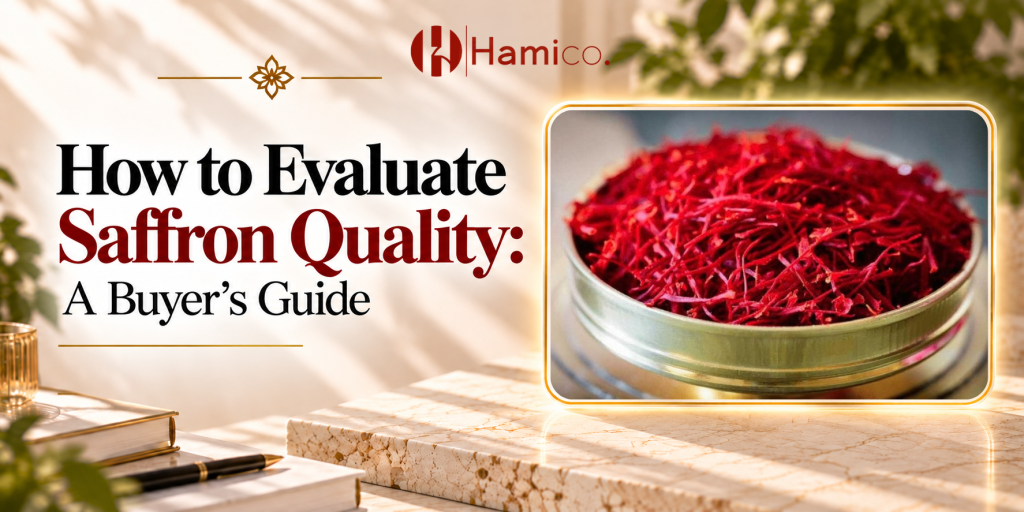
Iranian saffron is valued in international markets for its distinctive colour, aroma and flavour. However, for importers, distributors and food manufacturers, selecting saffron involves more than examining its appearance or choosing a commercial grade.
A reliable purchasing decision requires an understanding of the product’s physical characteristics, chemical parameters, purity, moisture content and food safety requirements.
This guide explains the main factors B2B buyers should consider when evaluating Iranian saffron quality.
1. Understand the Commercial Grade
Iranian saffron is commonly traded under commercial categories such as Super Negin, Negin, Sargol and Pushal.
These categories primarily describe physical characteristics, including stigma structure, thread length, the presence of attached yellow style and visual appearance.
- Super Negin: Typically characterised by long, thick, predominantly red threads.
- Negin: Generally consists of long red threads with an attractive visual appearance.
- Sargol: Consists primarily of the red stigma tips, typically shorter than whole-thread grades.
- Pushal: Contains red stigma portions with some attached yellow style.
Commercial grading practices may vary between suppliers and markets. Buyers should therefore define the required grade and physical specifications clearly. Most importantly, grade is not a complete measure of chemical quality, authenticity or food safety.
2. Evaluate Crocin, Picrocrocin and Safranal
Three important compounds are associated with saffron’s characteristic colour, taste and aroma.
Crocin: Colour Strength
Crocin is a major contributor to saffron’s characteristic red-orange colour when extracted into a suitable medium.
For professional buyers, colour strength should be assessed using an appropriate laboratory method rather than relying exclusively on the visual intensity of the threads.
Picrocrocin: Taste-Related Characteristics
Picrocrocin is associated with saffron’s characteristic bitter taste.
Its measurement can help characterise the product’s chemical profile and support comparisons against agreed quality specifications.
Safranal: Aroma
Safranal contributes to saffron’s distinctive aroma.
Aroma is influenced by saffron’s composition, processing and storage conditions. Appropriate analytical testing can complement sensory assessment when evaluating a product.
These three parameters provide different types of information. No single parameter should be treated as a complete indicator of overall saffron quality.
3. Understand ISO 3632
ISO 3632 is an important international reference for saffron specification and testing.
Depending on the applicable edition and testing scope, its methods address characteristics associated with colouring strength, bitter taste and aroma, alongside other relevant quality characteristics.
When reviewing laboratory results, buyers should verify:
- The applicable standard and edition
- The test method used
- The reported results and units
- The product grade and specification being assessed
- Whether the results meet the agreed purchasing requirements
A laboratory report should be interpreted against the applicable specification. Buyers should avoid assuming that a single numerical result establishes every aspect of quality or authenticity.
4. Check Moisture Content and Purity
Moisture and purity are important considerations for both product quality and storage stability.
Moisture Content
Excess moisture can affect product stability during storage and may contribute to deterioration under unsuitable conditions.
Buyers should specify acceptable moisture requirements and confirm the relevant test method and result.
Packaging, storage conditions and transport practices also matter, particularly for international shipments.
Purity and Foreign Matter
Saffron should be evaluated for foreign matter, unwanted plant material, excessive broken fragments and other impurities relevant to the product specification.
The appropriate acceptance criteria depend on the agreed grade, intended application and applicable market requirements.
Visual inspection can identify some concerns, but it cannot replace suitable testing where verification is necessary.
5. Verify Food Safety Requirements
Food safety is a separate and essential part of saffron procurement.
Depending on the destination market, intended use and applicable legislation, buyers may need to verify:
- Microbiological specifications
- Pesticide residue compliance
- Applicable contaminant limits
- Relevant hygiene and handling requirements
- Appropriate product and batch documentation
For European buyers, the applicable EU requirements should be checked for the specific product and market at the time of import.
A product should not be considered compliant simply because its colour, aroma or commercial grade appears satisfactory.
6. Request and Review the Certificate of Analysis (COA)
A Certificate of Analysis (COA) documents the results of specified tests for a product or batch.
Before approving a shipment, professional buyers should check whether the COA:
- Identifies the relevant product and, where applicable, batch
- Reports the required quality parameters
- Identifies the analytical methods or standards where relevant
- Includes results that can be compared with the agreed specifications
- Covers any additional tests required by the buyer or destination market
The COA should be reviewed alongside the purchase specification and other relevant shipment documentation.
Where the risks or purchasing requirements justify it, buyers may also request independent laboratory testing or additional verification.
7. Define Specifications Before Purchasing
A clear purchasing specification helps reduce misunderstandings between buyers and suppliers.
Before placing an order, buyers should agree on:
- Commercial grade and physical characteristics
- Required chemical parameters and acceptance criteria
- Moisture and purity requirements
- Applicable food safety and contaminant requirements
- Testing methods and documentation
- Packaging, storage and transport conditions
These requirements should be appropriate to the product’s intended use and the destination market.
For larger or recurring orders, consistent specifications make it easier to compare offers, assess batches and maintain purchasing standards over time.
Conclusion: Quality Goes Beyond Grade
Evaluating Iranian saffron requires a complete view of the product.
Commercial grade helps describe physical characteristics, while chemical analysis, moisture, purity, food safety checks and appropriate documentation provide additional information for a purchasing decision.
For B2B buyers, the most reliable approach is to establish clear specifications, request relevant test results and assess the product against the requirements of its intended application and destination market.
Hamico | Iranian Producer & Exporter
Iranian saffron for international B2B markets, supplied according to commercial and buyer specifications.